
 EN
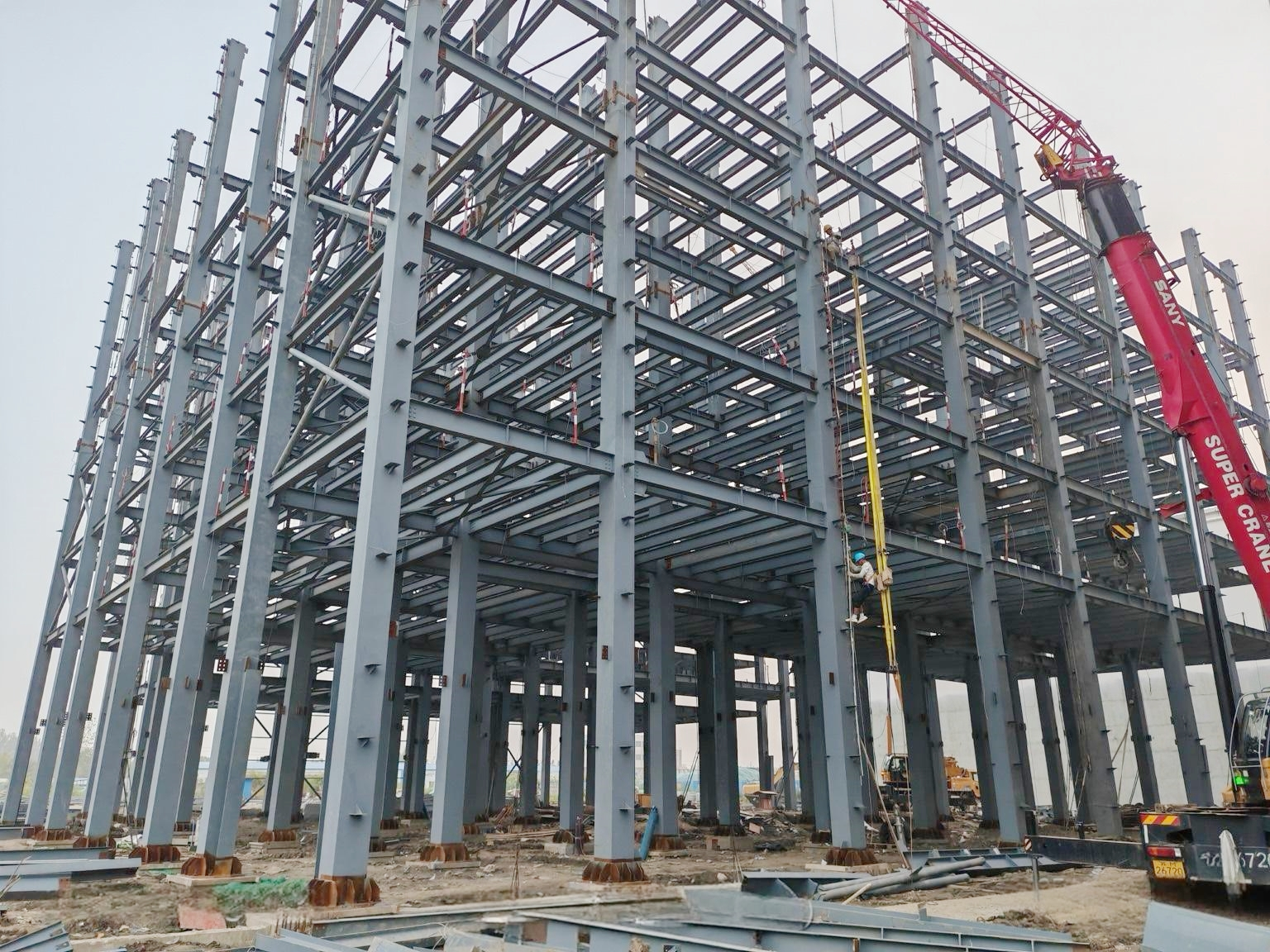
Accelerated Project Delivery with Prefabricated Building
Off-Site Manufacturing Enables Predictable, Compressed Timelines
Prefabricated building shifts critical construction activities into factory-controlled environments—eliminating weather disruptions, site congestion, and sequential trade dependencies that traditionally dictate schedules. According to the Modular Building Institute (2024), prefabricated projects can be completed up to 60% faster than conventional construction. This acceleration stems from standardized component production, repeatable assembly sequences, and just-in-time delivery, which collectively compress total project duration. For a commercial project of approximately 5,000 square meters, prefabricated steel construction reduces overall build time from 36–72 weeks to 16–30 weeks—a 55% average schedule reduction. These predictable timelines lower financing costs, minimize exposure to material price volatility, and enable earlier occupancy or revenue generation. Because manufacturing proceeds in parallel with foundation and site preparation, the critical path becomes shorter and more stable. Continuous quality checks in the controlled plant environment also eliminate much of the rework that typically stalls on-site progress. As a result, developers facing tight deadlines—such as schools, healthcare facilities, or retail expansions—increasingly rely on prefabricated building to meet opening dates without compromising structural performance or code compliance. Industry surveys indicate that 78% of developers select prefabricated steel specifically for time-sensitive projects. The predictability is not theoretical: consistent factory output makes weekly production targets visible and enforceable, transforming construction from an uncertain sequence into a scheduled manufacturing operation.
Parallel On-Site and Off-Site Workflows Eliminate Sequential Delays
Traditional construction forces foundation work, framing, enclosures, and interior finishes into a rigid, linear sequence—where any on-site delay cascades through the entire schedule. Prefabricated building removes this constraint by enabling site crews to prepare foundations, utilities, and access roads while factory teams simultaneously manufacture wall panels, roof trusses, and mechanical pods. This parallel workflow means assembled modules arrive ready for rapid installation precisely when the site is prepared. Instead of waiting weeks for framing after slab curing, crews can begin erecting structural components within days. Weather events that previously halted on-site framing now affect only a small set of installation tasks—while factory production continues uninterrupted. The result is a compressed critical path that consistently eliminates idle time between trades. Leading providers report this method cuts on-site construction time by 30–50% compared to site-built steel structures. Contractors can further optimize logistics by sequencing just-in-time deliveries to align with crane availability and labor shifts—reducing double-handling and storage constraints on tight sites. In multi-family housing, modular construction has enabled completion in a fraction of traditional time, unlocking earlier leasing revenue. This synchronization transforms the project schedule from a series of dependent steps into overlapping streams, so schedule risk is shared and actively managed—not passively accepted.
Cost Optimization Through Prefabricated Building
Standardization and Volume Production Drive Down Unit Costs
Standardized component designs unlock economies of scale rarely achievable in traditional on-site construction. In a controlled factory, manufacturers optimize material cutting, reduce offcuts, and repeat proven assembly sequences—lowering per-unit labor and material costs. Because components are designed once and produced many times, setup waste and rework decline sharply. Stick-built projects, by contrast, often require custom cutting and on-site adjustments that add time and expense. A standardized module catalog also enables volume purchasing of steel, engineered timber, insulation, and fasteners—further compressing input prices. Predictable factory pricing allows buyers to secure fixed quotes earlier in the process, reducing contingency budgets and the likelihood of mid-project change orders. Logistics improve too: flat-packed or stackable modules use truck capacity more efficiently, cutting freight cost per square meter. In multi-unit developments, manufacturing repetition and bulk procurement typically deliver direct construction cost savings over equivalent traditional builds—particularly where local labor rates are high or design complexity is moderate. Many manufacturers also offer interchangeable cladding, window, and partition options within standardized structural grids, so cost efficiency does not require sacrificing design intent. Ultimately, prefabrication converts variable site expenses into predictable factory costs—helping owners maintain tighter budgets while accelerating delivery.
Factory Assembly Mitigates Skilled Labor Shortages and Associated Cost Inflation
Factory assembly transfers work from scarce on-site crews to a stable, scalable manufacturing workforce. Traditional construction competes for electricians, carpenters, welders, and concrete finishers—shortages of which drive wage inflation and schedule uncertainty. In an off-site production environment, much of the structural work occurs indoors at fixed workstations with semi-automated tools. This setting requires fewer specialized field workers per project and supports cross-training, allowing technicians to handle multiple repetitive tasks without dependency on any single trade. Production continues regardless of weather or site access issues, raising labor productivity and reducing downtime. Lower rework rates avoid paying crews to fix defects. Consequently, project owners spend less on overtime, travel allowances, and temporary site supervision. In tight labor markets, modular construction offers a measurable buffer against wage-driven budget overruns—making total installed costs more predictable and often lower than traditional methods.
Enhanced Sustainability Performance of Prefabricated Building
Precision Manufacturing Reduces Material Waste and Embodied Carbon
Precision manufacturing in controlled factory settings significantly improves resource utilization—reducing offcuts, rework, and surplus ordering. Less material waste directly lowers embodied carbon, since fewer raw materials must be extracted, transported, and processed. The prefabricated model also shortens on-site activity and minimizes raw-material transport distances, further decreasing greenhouse gas emissions. Reusable steel and timber modules support future dismantling and relocation, extending material life and cutting whole-life carbon. Controlled indoor assembly prevents weather damage and material deterioration—reducing waste before it begins. Because factory production follows tight tolerances and code-specific quality checks, defective elements are far less likely to enter the waste stream. For developers pursuing sustainability targets, this tighter resource loop turns precision into a practical carbon advantage over conventional methods.
Superior Quality Consistency and Control in Prefabricated Building
Automation and Rigorous Factory QA Ensure Repeatable Structural Integrity
Prefabricated building shifts structural assembly from weather-exposed job sites to climate-controlled factories—where automated processes and repeatable workflows govern every cut, joint, and connection. Computer Numerical Control (CNC) machines, laser-guided templates, and automated cutting tools produce components with tolerances difficult to match in traditional construction. Daily repetition by specialized crews—supported by independent inspections and documented quality gates—reduces human error and on-site rework. Standardized manufacturing ensures each module or panel is repeatable, so structural connections fit consistently during final assembly. Automated quality checks detect defects before materials leave the factory—lowering lifecycle risks and avoiding costly corrections. This controlled environment supports tighter building envelopes, more uniform connections, and longer service life than conventional methods. Factory QA does not eliminate all risk—but it replaces variable field conditions with measurable, repeatable quality benchmarks that strengthen long-term structural performance.
Frequently Asked Questions (FAQ)
What is prefabricated building?
Prefabricated building involves constructing building components in a factory-controlled environment and then assembling them on-site. This method eliminates weather delays, improves schedule predictability, and reduces costs.
How does prefabricated construction save time compared to traditional building methods?
Prefabricated construction saves time by allowing site work (like foundation and utility preparation) and factory-manufacturing processes to occur simultaneously. This eliminates sequential delays and reduces total project duration by up to 60%.
Is prefabrication more cost-effective than traditional construction?
Yes, prefabrication is often more cost-effective due to standardized designs, volume production, reduced labor costs, and minimized material waste. These factors contribute to lower per-unit costs and project budgets.
Does prefabrication address skilled labor shortages?
Yes, prefabricated building transfers much of the construction work to factories, which reduces the demand for skilled on-site labor. This approach stabilizes labor costs and minimizes schedule disruptions caused by labor shortages.
How sustainable is prefabricated building?
Prefabricated construction is more sustainable due to precision manufacturing that reduces material waste and embodied carbon. It also promotes the use of reusable modules, further enhancing sustainability.
Are prefabricated buildings as durable as traditionally constructed buildings?
Yes, prefabricated buildings are often more durable due to controlled manufacturing environments, automated processes, and rigorous quality assurance checks that ensure structural integrity and consistency.
Table of Contents
- Accelerated Project Delivery with Prefabricated Building
- Cost Optimization Through Prefabricated Building
- Enhanced Sustainability Performance of Prefabricated Building
- Superior Quality Consistency and Control in Prefabricated Building
-
Frequently Asked Questions (FAQ)
- What is prefabricated building?
- How does prefabricated construction save time compared to traditional building methods?
- Is prefabrication more cost-effective than traditional construction?
- Does prefabrication address skilled labor shortages?
- How sustainable is prefabricated building?
- Are prefabricated buildings as durable as traditionally constructed buildings?