
 EN
Why Industrial Metal Buildings Demand Specialized Fire Protection
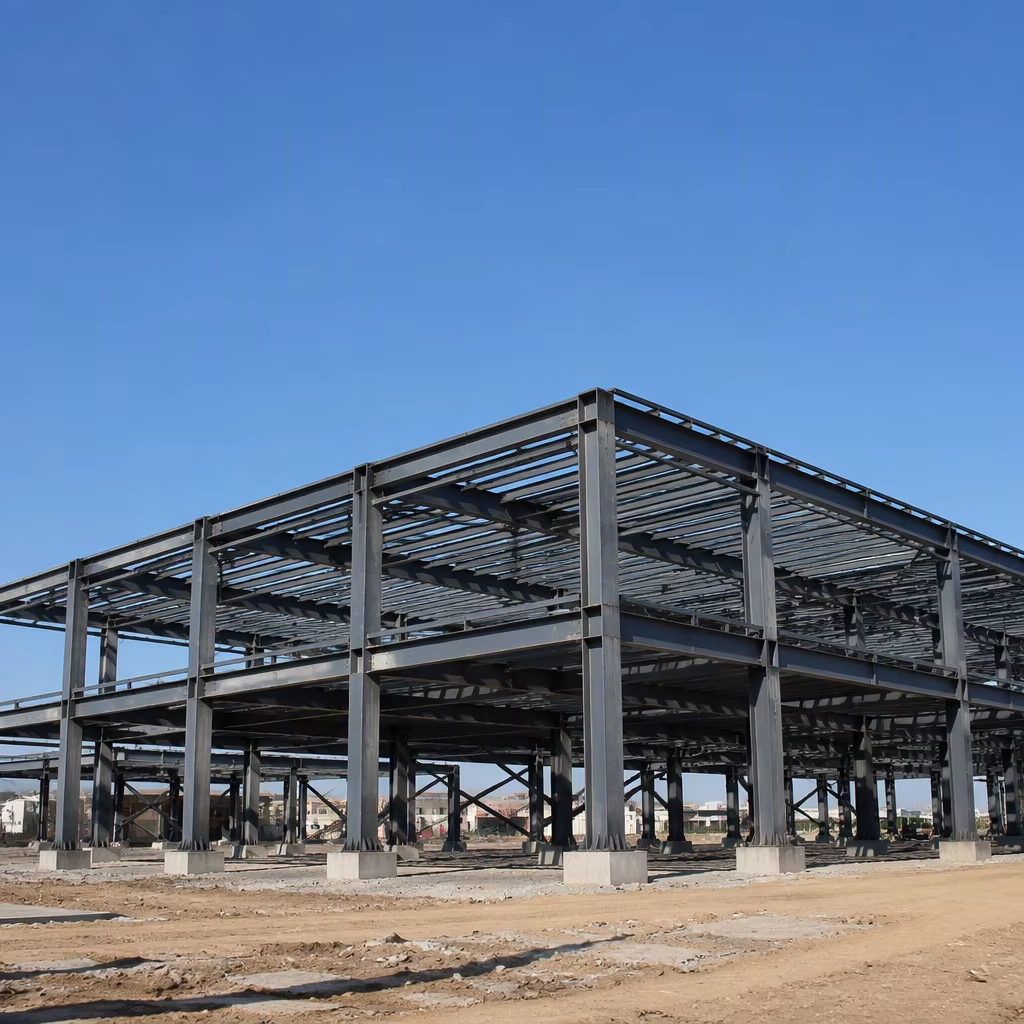
Industrial metal buildings rely on steel framing for its strength, economy, and non-combustibility—but steel is not fireproof. Under thermal stress, it rapidly loses load-bearing capacity, and the open, high-bay layouts typical of these structures accelerate fire growth and smoke movement in ways conventional fire protection systems are not designed to manage. This combination necessitates a tailored, integrated approach—distinct from that used in low-rise commercial construction.
Thermal Degradation of Steel at Elevated Temperatures
Steel begins losing structural integrity well before visible deformation occurs. At 550°C, it retains only about 50% of its ambient-temperature yield strength; at 700°C, that drops below 20% (ASCE 2020). Unprotected steel columns and rafters in industrial metal buildings can reach critical failure temperatures within 10–15 minutes of direct fire exposure. Because these structures commonly use long-span trusses and rigid frames, even modest reductions in steel capacity can trigger buckling or progressive collapse. Effective fire protection must therefore slow heat transfer—not just suppress flames—to keep steel below critical thresholds long enough for safe evacuation and effective firefighting. Without this thermal barrier, a localized fire can compromise primary framing and precipitate large-scale roof failure.
How High-Bay Geometry and Open Framing Accelerate Fire Spread
Industrial metal buildings typically feature clear heights exceeding 12 m, unobstructed floor plans, and exposed structural steel. This geometry enables hot gases to rise and form a deep, energetic ceiling jet that spreads heat across vast areas without compartment walls to contain it. Open framing further promotes turbulent airflow and increases the surface area of steel exposed to radiant and convective heat. In addition, high-bay spaces delay sprinkler activation: in a 15 m tall bay, rising smoke may cool below the activation temperature of ceiling-mounted detectors before reaching them. As a result, fires often grow significantly in size and intensity before suppression begins. Fire protection strategies must therefore account for both vertical distance and the absence of physical barriers that would otherwise limit smoke and flame propagation.
Passive Fire Protection Solutions for Industrial Metal Buildings
Passive fire protection preserves structural integrity by slowing heat transfer—without relying on detection, power, or water supply. Coating systems and board assemblies are the two most widely deployed approaches in industrial metal buildings.
Intumescent Coatings and Spray-Applied Fire-Resistive Materials (SFRM)
Structural steel can retain less than half its ambient yield strength at 600°C (Eurocode 3, 2005), underscoring the need for reliable thermal barriers. Intumescent coatings are thin-film products that expand when heated, forming an insulating char with low thermal conductivity. Dry film thickness ranges from 0.2 mm to 5 mm depending on the steel section factor and required fire-resistance rating (30–120 minutes). They maintain architectural aesthetics and are ideal for occupied or visible areas. In contrast, spray-applied fire-resistive materials (SFRM) use cementitious or mineral-fiber blends to create thicker, sacrificial layers—typically 10–40 mm—that conform well to complex geometries and concealed steel. While generally more cost-effective per unit area, SFRM is more sensitive to moisture, impact damage, and substrate preparation. Both systems require strict application protocols and third-party verification per ASTM E119 (2020).
Fire-Rated Gypsum Assemblies and Compartmentalization Strategies
Fire-rated gypsum assemblies protect steel by enclosing it in multi-layer board systems—typically Type X or Type C gypsum over metal studs or hat channels—that release chemically bound water during fire exposure. This endothermic reaction absorbs heat and delays steel temperature rise, enabling 1–4 hour fire-resistance ratings when tested to ASTM E119 (2020). Compartmentalization extends this principle using fire-rated walls, doors, dampers, and firestop systems at penetrations. In industrial metal buildings, strategic compartmenting around high-hazard processes or combustible storage limits fire and smoke migration, safeguards egress paths, and reduces thermal exposure to adjacent framing. Crucially, passive separation depends on system-level performance—not individual components—so all joints, edges, and penetrations must follow tested assembly details.
Active Fire Protection Systems Tailored to Industrial Metal Buildings
High-Bay Sprinkler Design: NFPA 13 Compliance for Ceilings >12m
In industrial metal buildings with ceilings above 12 m, conventional sprinklers often fail to deliver water effectively to the base of a deep-seated fire before the heat plume disperses. Per NFPA 13, high-bay applications require Early Suppression Fast Response (ESFR) or Control Mode Specific Application (CMSA) sprinklers with K-factors ≥25.2. These heads produce larger, higher-momentum droplets capable of penetrating strong fire plumes in open-framed environments. Designers must verify deflector-to-ceiling clearance, maximum storage height, and commodity classification—especially where high-piled combustibles increase hydraulic demand. Hydraulic calculations must also address roof slope, steel framing obstructions, and optional draft curtains. For many warehouses exceeding 13 m in clear height, ESFR sprinklers operating at 50–75 psi are typical, though exact parameters depend on listing-specific requirements. Integrating coordinated fire alarm signaling and mechanical or natural smoke venting helps reduce time-to-activation.
Code Compliance and Jurisdictional Requirements for Industrial Metal Buildings
NFPA, EN, FM Global, and VDS Standards: Key Alignment Points and Divergences
NFPA (U.S.), EN (Europe), FM Global, and VdS (Germany) share a common objective: minimizing fire loss in industrial metal buildings through robust passive and active protection. All treat unprotected steel as a critical vulnerability and mandate layered defense strategies. Yet key differences shape design outcomes.
NFPA 13 (2022) mandates sprinklers in most industrial occupancies and provides granular guidance for high-bay storage configurations. EN 12845 (2015) classifies hazards differently—e.g., metal fabrication may fall under distinct occupancy categories—and prescribes water densities based on hazard class rather than ceiling height alone. FM Global frequently exceeds minimum code requirements, emphasizing business continuity via enhanced water supplies, earlier detection, and tighter control of ignition sources. VdS guidelines reflect insurer-driven priorities, including stringent fire wall construction and mandatory smoke venting. Notably, NFPA 13 and EN 12845 differ in how they classify ceiling heights above 12 m—leading to variations in sprinkler spacing, density, and hydraulic design. Similarly, while ASTM E119 (2020) and EN 1363-1 (2012) use comparable time-temperature curves, test tolerances, reporting formats, and classification nomenclature differ: EN uses R30/R60/R90 designations; NFPA uses hourly ratings. FM Global and VdS place greater emphasis on asset protection and operational resilience than life-safety–focused codes do. Designers must confirm which standard applies in the project’s jurisdiction before finalizing fire protection specifications.
FAQ About Fire Protection in Industrial Metal Buildings
Why is fire protection critical for industrial metal buildings?
Fire protection is essential because steel, although non-combustible, loses structural integrity rapidly under high temperatures. In addition, the open layouts and high-bay geometries of industrial metal buildings accelerate fire spread, requiring specialized protection systems.
What are passive fire protection solutions for steel structures?
Passive solutions include intumescent coatings, spray-applied fire-resistive materials (SFRM), and fire-rated gypsum assemblies. These systems slow heat transfer and maintain the steel's load-bearing capacity during fire exposure.
What makes high-bay sprinkler systems unique?
High-bay sprinkler systems use ESFR or CMSA sprinklers designed to penetrate intense fire plumes in environments with ceilings above 12 meters. They produce larger droplets and operate at higher momentum to ensure effective suppression.
How do jurisdictional codes impact fire protection design?
Codes such as NFPA, EN, FM Global, and VdS differ in hazard classification, sprinkler design, and fire-resistance standards. Compliance depends on jurisdiction, and designers must adapt their strategies to meet regional requirements.
Table of Contents
- Why Industrial Metal Buildings Demand Specialized Fire Protection
- Passive Fire Protection Solutions for Industrial Metal Buildings
- Active Fire Protection Systems Tailored to Industrial Metal Buildings
- Code Compliance and Jurisdictional Requirements for Industrial Metal Buildings
- FAQ About Fire Protection in Industrial Metal Buildings