
 EN
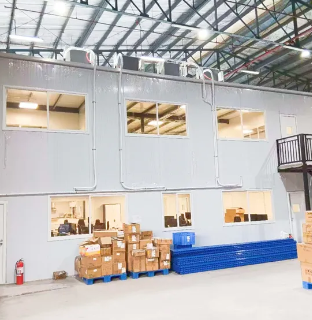
Structural Performance: Strength, Resilience, and Design Flexibility
Structural performance dictates the long‑term viability of any commercial project, influencing safety, flexibility, and lifecycle resilience. The following comparison contrasts the material‑driven advantages of a pre engineered steel building with concrete’s traditional strengths.
Tensile Strength, Ductility, and Seismic Resilience of Pre Engineered Steel Building
A pre engineered steel building delivers exceptional seismic resilience through steel’s balanced tensile and compressive yield strength (typically 250–550 MPa for structural grades), enabling frames to absorb dynamic loads without brittle fracture. This inherent ductility allows members to deform plastically under stress—dissipating earthquake energy rather than transferring it to connections. In seismic zones, pre-engineered steel structures designed with ductile moment-resisting joints routinely withstand inter-story drift ratios exceeding 2% without collapse. According to a 2021 American Institute of Steel Construction analysis, pre-engineered steel buildings reduced earthquake-induced structural damage by up to 50% compared to conventional concrete designs. The high strength-to-weight ratio also reduces foundation loads while supporting long, column-free spans—an advantage that expands architectural freedom without compromising safety.
Compressive Strength, Thermal Mass, and Crack Sensitivity in Concrete Buildings
Concrete excels in compressive strength (20–100 MPa) and provides high thermal mass, which can reduce peak heating and cooling loads by roughly 20% (Concrete Centre, 2020). However, its tensile strength is only 8–12% of its compressive capacity, making it inherently vulnerable to cracking from shrinkage, thermal cycling, or seismic movement. Even micro-cracks can expose reinforcement to corrosion, progressively undermining durability. Under severe seismic shaking, unreinforced or poorly detailed concrete frames may fail in a brittle manner, losing up to 30% of their compressive strength after repeated cracking cycles (BRE, 2019). While formwork supports expressive, curved forms, concrete’s crack sensitivity demands precise curing and complex reinforcement cages—constraints that can limit design flexibility and extend schedules relative to steel-based systems.
Construction Speed and Site Efficiency: Pre Engineered Steel Building Acceleration Advantages
Factory-Fabricated Components and Bolted Assembly Reduce Erection Time by 40–60%
Off-site manufacturing transforms construction timelines. Structural steel components are cut, welded, and painted in controlled factory environments while site crews simultaneously prepare foundations and utilities—enabling true parallel processing. Pre engineered steel building frames arrive on site ready for rapid bolted assembly, eliminating the need for formwork, rebar tying, and concrete pouring. Crews connect pre-drilled members with high-strength bolts, achieving frame completion up to 60% faster than cast-in-place alternatives. For example, a 50,000-square-foot steel warehouse was fully enclosed in 12 weeks—nearly 40% faster than a comparable concrete tilt-up building. Bolted connections reduce reliance on specialized labor and heavy lifting equipment, further accelerating progress. With no curing delays or weather dependencies, project managers gain predictable, compressed schedules that support earlier occupancy and faster revenue generation—particularly valuable for logistics, retail, and manufacturing investors.
Concrete Limitations: Curing Delays, Formwork Complexity, and Weather Vulnerability
Concrete construction follows a rigid, linear sequence: erecting formwork, placing rebar, pouring, finishing, and curing each segment before proceeding. The critical curing phase requires 7 to 14 days of controlled moisture before structural loads can be safely applied—introducing unavoidable idle time. Weather poses persistent risks: rain washes out fresh concrete; freezing halts hydration; extreme heat triggers uncontrolled cracking. These delays compound timelines and inflate indirect costs—including extended site supervision and equipment rental. Even tilt-up panels—faster than cast-in-place—require heavy crane lifts and on-site casting beds, causing congestion and added labor. Formwork stripping and re-shoring add steps that steel systems entirely eliminate. When speed to market is paramount, concrete’s on-site dependencies and environmental sensitivity make it less efficient for commercial developers.
Lifecycle Economics and Sustainability: Cost Ownership and Environmental Impact
Lower Long-Term Costs of Pre Engineered Steel Building Through Recyclability and Adaptability
A pre engineered steel building (PESB) delivers substantial lifecycle cost benefits rooted in steel’s intrinsic properties. Steel is endlessly recyclable without degradation of mechanical performance, with a North American recycling rate exceeding 98% (AISI, 2022). At end-of-life, PESB components can be fully dismantled, and the steel sold for scrap—recovering 20–30% of original material cost—while concrete structures typically require costly demolition and yield only limited downcycled aggregate. Adaptability further lowers ownership costs: bolted connections and modular framing allow fast, low-disruption expansions. Adding a production bay, for instance, can take weeks—not months. A leading manufacturing firm avoided $2.3 million in future retrofit costs by selecting a clear-span steel frame over concrete—a decision validated by a 2021 RSMeans life-cycle costing analysis showing an average 18% lower total ownership cost over 50 years for PESBs in industrial settings.
Embodied Carbon Trade-Offs: Portland Cement vs Structural Steel in Life-Cycle Assessment
When evaluating environmental impact across the full building lifecycle, structural material choice significantly influences embodied carbon. Portland cement—the binder in concrete—is responsible for approximately 8% of global CO₂ emissions (IEA, 2022). A typical reinforced concrete commercial building embodies 350–450 kg of CO₂ equivalent per square meter of gross floor area, driven largely by energy-intensive clinker production and aggregate transport. In contrast, modern structural steel production increasingly relies on electric arc furnaces (EAF) that melt recycled scrap, emitting just 0.3–0.4 tonnes of CO₂ per tonne of steel—about one-third the emissions of basic oxygen furnaces using iron ore. A comparative life-cycle assessment by the University of Cambridge (2022) found that steel-framed office buildings with 85% recycled content exhibited a 38% lower global warming potential over 60 years than equivalent concrete structures—even after accounting for concrete’s thermal mass benefits. The table below summarizes typical embodied carbon ranges.
| Building Frame Type | Embodied Carbon (kgCO₂e/m² GFA) |
|---|---|
| Reinforced concrete (site‑cast) | 350 – 450 |
| Structural steel (high recycled content, EAF) | 200 – 280 |
| Structural steel (virgin ore, BOF) | 400 – 500 |
These findings underscore that a PESB, when produced with high recycled content and designed for deconstruction, can halve the cradle-to-grave carbon burden—aligning with tightening green building standards and ESG commitments.
FAQ Section
What is the main advantage of a pre-engineered steel building in seismic zones?
Pre-engineered steel buildings offer exceptional seismic resilience due to steel’s balanced tensile and compressive strength. This allows steel frames to absorb dynamic loads and dissipate earthquake energy without suffering brittle fracture.
How does concrete perform in terms of thermal mass and compressive strength?
Concrete provides high compressive strength (20–100 MPa) and excellent thermal mass, reducing peak heating and cooling loads by about 20%. However, its low tensile strength makes it prone to cracking under stress.
Why are pre-engineered steel buildings faster to construct?
Pre-engineered steel buildings utilize factory-fabricated components that arrive on-site ready for assembly. This parallel processing shortens construction timelines by 40–60% compared to concrete alternatives.
What are the sustainability benefits of steel compared to concrete?
Steel is recyclable without loss of quality and has a higher recycling rate (98%) than concrete. This reduces lifecycle environmental impact, especially when paired with high recycled content.