
 EN
EN
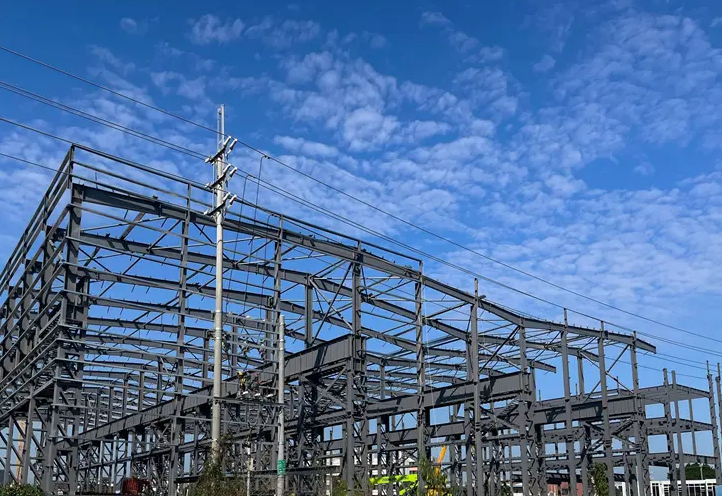
Safety and Structural Integrity: The Non-Negotiable Consequence of Precision in Structural Steel Fabrication
How fabrication tolerances govern load-path reliability and collapse resistance
Fabrication tolerances define the allowable dimensional deviation in structural steel components—and they directly govern how reliably a structure transfers load along its engineered path. Every beam, column, and connection is designed to carry stress in a specific sequence; even minor deviations can reroute forces to unintended elements, compromising the structure’s ability to resist wind, seismic events, or sustained static loads. Tight, consistent tolerances ensure components assemble as calculated—preserving the integrity of the original structural analysis and the building’s collapse resistance. For critical infrastructure like bridges and high-rises, loose tolerances introduce latent weaknesses that may remain undetected until extreme or prolonged loading triggers failure.
Lessons from NIST and AISC case reviews: When minor deviations compromise life safety
Post-failure investigations by the National Institute of Standards and Technology (NIST) and the American Institute of Steel Construction (AISC) confirm that unaddressed minor fabrication deviations contribute to 12% of non-seismic steel structural collapses (AISC, 2023). In one well-documented partial parking garage collapse, a 3/8-inch misalignment in connection plate holes forced field crews to ream holes beyond specification—reducing shear capacity by 20% below design. That adjustment went uninspected and ultimately failed under routine live load, causing injuries and multi-million-dollar reconstruction. These cases underscore a fundamental truth: precision at the fabrication stage isn’t a quality “nice-to-have”—it’s a foundational life-safety requirement embedded in every successful steel construction project.
Drawing Accuracy and Digital Fidelity: The First Line of Defense in Structural Steel Fabrication
The cascade effect: How drawing errors trigger rework, schedule delays, and field-fit failures
Accurate, verified drawings are the essential first line of defense in structural steel fabrication. A single error—a dimension off by a few millimeters, a mis-specified connection detail—doesn’t stay isolated in the drafting phase. It initiates a costly cascade: scrap material, assembly rework, production pauses, and, if undetected, on-site fit failures. Industry quality assurance data shows such errors can inflate total project costs by up to 15% when corrective action begins mid-production. At the erection stage, mismatched members force time-intensive field modifications—delaying schedules, increasing labor costs, and potentially introducing unvetted structural compromises. Systematic, multi-stage drawing reviews and integrated digital clash detection stop this chain before cutting begins.
Technology-Enabled Precision: CNC, Robotic Welding, and CAD-to-CAM Integration in Structural Steel Fabrication
Digital thread implementation reduces dimensional deviation by up to 42% — evidence from PCI and Steel Construction Institute benchmarks
The digital thread—the seamless flow of design data from 3D modeling through CNC cutting, bending, and assembly—eliminates manual interpretation and transcription errors that historically drove dimensional inconsistency. Independent benchmarks from the Precast/Prestressed Concrete Institute (PCI) and the Steel Construction Institute show full digital thread adoption reduces dimensional deviation by up to 42% (Steel Construction Institute, 2023). This level of consistency ensures components leave the shop matching engineering intent—cutting rework, minimizing material waste, and reinforcing long-term structural fidelity.
Robotic welding and real-time metrology: Achieving sub-millimeter repeatability for high-volume structural steel components
Manual welding introduces subtle, cumulative inconsistencies—even among highly skilled operators—leading to variable weld profiles, inconsistent penetration, and thermal distortion across large batches. Over hundreds of identical components, these variances compound into ill-fitting connections and compromised joint strength. Robotic welding, especially when paired with real-time metrology (in-process scanning), delivers sub-millimeter repeatability at scale. Automated systems dynamically compensate for material variation, maintain precise heat input and weld geometry, and operate without fatigue—ensuring uniform quality, faster throughput, and superior long-term structural performance.
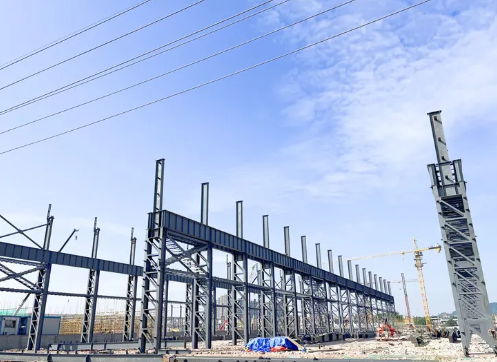
Design for Manufacturability and Distortion Control: Proactive Precision Across the Structural Steel Fabrication Lifecycle
DFM-driven collaboration cuts field adjustments by 65% — insights from AECOM’s 2022 infrastructure study
Design for Manufacturability (DFM) embeds fabrication feasibility—and precision—into the earliest design decisions. When structural engineers, architects, and fabricators collaborate early, they preempt avoidable issues: thermal distortion from welding sequences, material shrinkage, or transport constraints that force last-minute redesigns. AECOM’s 2022 infrastructure study of over 100 mid-to-large commercial and public projects found that consistent DFM integration reduced on-site field adjustments by 65%. That reduction translates directly into tighter schedules, lower unplanned labor spend, and more predictable dimensional accuracy across all components. Critically, proactive DFM also enables intentional distortion control planning—allowing teams to anticipate, counteract, and validate weld-induced deformation before final assembly, eliminating costly post-fabrication corrections.
FAQ: Structural Steel Fabrication
Why are fabrication tolerances critical in steel construction?
Fabrication tolerances ensure that steel components fit as designed, preserving load-path reliability and preventing unintended structural weaknesses that could lead to failure.
How can drawing inaccuracies affect a steel fabrication project?
Drawing inaccuracies can trigger material waste, rework, delays, and field-fit errors that inflate costs and compromise structural safety.
What advantages do robotic welding and real-time metrology offer?
These technologies provide sub-millimeter repeatability, consistent weld quality, faster production, and improved long-term structural performance.
What is the role of Design for Manufacturability (DFM) in structural steel fabrication?
DFM ensures fabrication feasibility by incorporating precision into the design phase, reducing field adjustments, and mitigating post-fabrication issues like distortion.
Table of Contents
- Safety and Structural Integrity: The Non-Negotiable Consequence of Precision in Structural Steel Fabrication
- Drawing Accuracy and Digital Fidelity: The First Line of Defense in Structural Steel Fabrication
- Technology-Enabled Precision: CNC, Robotic Welding, and CAD-to-CAM Integration in Structural Steel Fabrication
- Design for Manufacturability and Distortion Control: Proactive Precision Across the Structural Steel Fabrication Lifecycle
- FAQ: Structural Steel Fabrication