
 EN
EN
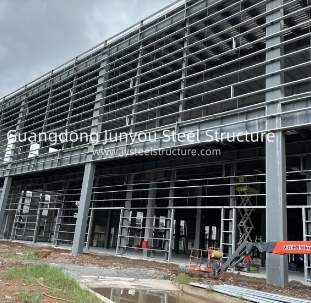
Faster Time-to-Value: How Prefabricated Building Accelerates Capital Deployment
40–50% Shorter Project Timelines vs. Traditional Construction
Prefabricated building compresses project schedules by 30–50% compared to conventional stick-built construction—delivering occupancy and revenue generation significantly sooner. This acceleration stems from parallel processing: while foundations and site utilities are prepared on-site, structural modules, wall panels, and integrated mechanical systems are manufactured simultaneously in controlled factory environments. This eliminates sequential bottlenecks—such as waiting for framing to finish before interior work begins—and transforms linear timelines into overlapping workflows.
For a typical commercial project, this efficiency can reduce total build time from 12 months to just 6–8 months. On a $5 million project, completing 10 weeks early saves approximately $77,000 in carrying costs alone, assuming an 8% annual financing rate. Factory-controlled production also delivers far greater schedule reliability: 98% of prefabricated projects meet their manufacturing deadlines, versus just 63% for fully traditional on-site builds, which remain vulnerable to weather, coordination failures, and labor shortages.
Off-Site Manufacturing Decouples Site Work from Structural Assembly
The core time advantage of prefabrication lies in decoupling site development from structural production—effectively splitting the critical path. In conventional construction, vertical assembly cannot begin until the foundation is fully cured and inspected. With prefabrication, civil crews start earthwork and foundation pours the moment a building permit is issued—while, concurrently, precision-manufactured modules are fabricated off-site. That factory workflow is impervious to rain, snow, or heat delays, ensuring uninterrupted progress.
When the site is ready, completed modules—often pre-glazed, pre-clad, and pre-fitted with MEP rough-ins—are delivered and rapidly set by crane. Final inter-module connections and finishing require only a small, specialized crew. This approach reduces on-site labor hours by 40–60%, replacing large, weather-dependent teams with a predictable, engineered assembly process. The result is not only faster delivery but also markedly less site congestion, fewer logistical headaches, and tighter control over sequencing and safety.
Case Study: Rapid Logistics Hub Deployment Through Modular Strategy
A major e-commerce provider needed immediate sorting capacity for surging demand—but a traditional 15–18-month build timeline was commercially untenable. By adopting a comprehensive prefabrication strategy for primary structural steel and the building envelope, its 600,000-square-foot Ohio logistics fulfillment center was delivered and operational in just 9 months.
Site preparation and foundation work advanced in parallel with off-site fabrication. The on-site assembly phase—bolting together massive pre-engineered steel bays and pre-installed roof and wall panels—was completed in weeks rather than months. This accelerated deployment allowed the provider to process millions of additional packages during a single peak season, capturing revenue otherwise lost to delay. The project underscores how prefabricated building transforms capital deployment from a fixed-cost, schedule-bound activity into a strategic lever for market responsiveness and competitive advantage.
Lower Total Cost of Ownership Through Prefabricated Building Predictability
12–20% Reduction in Lifecycle Costs for Mid-Rise Commercial Prefabricated Building
Lifecycle cost analysis shows that off-site manufacturing reduces total ownership expenses by 12–20% for mid-rise commercial projects (Modular Building Institute, 2023). These savings extend well beyond initial construction: they include lower financing charges from shortened build windows, fewer weather-related disruptions, and dramatically reduced rework due to factory-controlled quality. The table below highlights how prefabrication reshapes key cost drivers:
| Cost Driver | Traditional Construction | Prefabricated Approach | Typical Lifecycle Saving |
|---|---|---|---|
| Material waste | 15–20% waste from over-ordering and damage | <5% waste through factory precision and recycling | ~10% of material spend |
| Labor efficiency | High variability; weather stoppages and skill gaps | Steady assembly line; 40% fewer on-site person-hours | 15–20% of labor cost |
| Interim financing | Longer build = higher interest payments | Accelerated schedule cuts holding costs | 3–5% of total budget |
| Quality and rework | Rework often triggers budget overruns | Controlled environment yields few defects | Avoided contingency costs |
These compounding efficiencies translate directly into predictable capital outlays—enabling investors to model returns with greater confidence and reduce reliance on costly contingency buffers.
Standardized Modules Minimize Labor Volatility and Material Waste
Standardization turns construction into a repeatable industrial process. In factories, modules are assembled by consistent, trained teams shielded from weather, access constraints, and the skilled-labor shortages that plague on-site builds. This stability eliminates the 10–25% cost spikes commonly caused by overtime, rework, or emergency specialist hires.
At the same time, standardized procurement allows manufacturers to buy materials in bulk with exact specifications—slashing waste to under 5% and cutting procurement overhead. Even amid volatile commodity markets, the controlled workflow locks in unit costs early. For investors, that predictability means capital deployment is no longer at the mercy of labor-market swings or raw-material price shocks.
Enhanced Investment Risk Mitigation with Prefabricated Building
Labor Shortage Resilience: 68% of Developers Cite This as Top Adoption Driver
Labor scarcity remains one of construction’s most volatile cost and schedule risks. A 2023 industry developer survey found that 68% now cite workforce availability as the top driver for adopting prefabricated building methods. By shifting the majority of structural assembly to off-site factories, projects drastically reduce dependence on large, specialized site crews. A typical mid-rise commercial project using conventional methods may require 120–150 on-site workers over several months; prefabrication can cut that figure by 30–40%, relying instead on a smaller team for final module connection and finishing.
This deliberate decoupling insulates investors from sudden wage inflation, local labor disputes, and productivity variability—factors that historically push 18–25% of traditional builds past their original completion dates. The result is not only faster path-to-revenue but also a more reliable capital deployment schedule, aligning asset delivery tightly with investor return expectations.
Navigating Regulatory Complexity: Local Codes vs. National Module Certification
Layered building regulations introduce hidden risk for investors. Prefabricated modules built under nationally recognized certification programs—such as those issued by ICC-ES or state industrial building authorities—carry consistent, factory-inspected quality documentation. Yet local jurisdictions often impose unique seismic, wind, or energy requirements, creating dual-compliance hurdles.
Successful investment models treat this not as a barrier but as a structured filter: selecting a module supplier whose certifications cover 90% of target market codes—and engaging a local architect to address supplemental load requirements in parallel with design—shrinks permit review cycles. Projects using this parallel-compliance strategy report 25–35% fewer plan check resubmissions compared to site-built counterparts.
Moreover, the rigorous quality records of factory-built modules often accelerate green loan underwriting. Some lenders offer rate reductions of 0.25%–0.5% for certified low-waste construction—directly boosting net present value. Standardizing modular certifications upstream thus transforms regulatory friction into a citable advantage for risk-conscious stakeholders.
FAQs
What is prefabricated building?
Prefabricated building refers to the process of manufacturing building components, such as structural modules and wall panels, off-site in controlled environments before assembling them on-site.
How does prefabrication shorten construction timelines?
Prefabrication allows for parallel processing, where site preparation and foundation work occur simultaneously with off-site module manufacturing, shortening project timelines by 30–50%.
Are prefabricated buildings cost-effective?
Yes, prefabricated buildings can reduce lifecycle costs by 12–20% through efficiencies such as lower material waste, reduced on-site labor hours, and minimized rework.
What role does labor play in prefabrication?
Prefabrication minimizes the need for large on-site crews by shifting much of the construction process to factories, making projects less vulnerable to labor shortages and wage inflation.
How does prefabrication address regulatory challenges?
Prefabricated modules are often certified under national standards, streamlining compliance with local building codes and accelerating permit review processes.