
 EN
EN
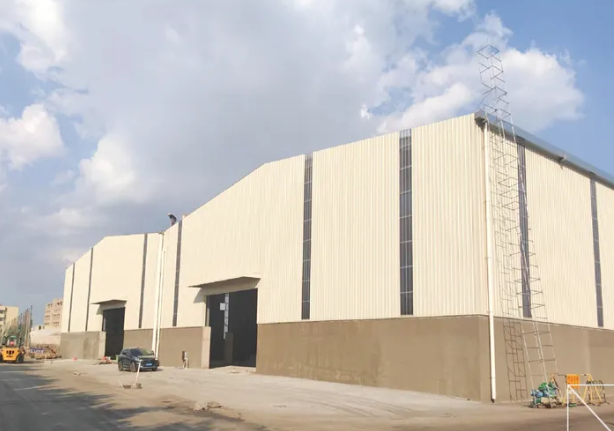
Understanding Lifespan: Design Life vs. Actual Service Life of a Prefabricated Steel Building
How industry standards (ASTM, AISI, ISO) define design life, service life, and maintenance thresholds
Standards from ASTM International, the American Iron and Steel Institute (AISI), and the International Organization for Standardization (ISO) establish the baseline for structural longevity. A prefabricated steel building is typically engineered to a 50-year design life per ISO 15686 and AISC 360—defined as the minimum period during which the structure meets safety and serviceability criteria under normal loads. Design life is a calculated benchmark; service life reflects actual performance until major intervention is required. Maintenance thresholds are decisive: non-structural components like roof panels often need replacement every 20–30 years, while primary steel frames can remain structurally sound beyond 100 years if corrosion is effectively managed. Regular inspections aligned with ASTM A6 guidelines help detect early signs of coating degradation or connection wear—enabling timely interventions that preserve integrity and extend real-world service life well past the original design target.
Typical service life ranges by application: warehouses, agricultural facilities, and commercial prefabricated steel buildings
Warehouses—operating in controlled, low-moisture environments—commonly achieve 50–70+ years of functional service life. Agricultural facilities face greater challenges from ammonia, humidity, and temperature swings, yet with appropriate coating selection and disciplined maintenance, they regularly reach 40–60 years. Commercial prefabricated steel buildings, benefiting from interior climate control and higher aesthetic expectations, routinely deliver 50–80 years. In all cases, the primary steel frame remains viable beyond 100 years; it’s the envelope and secondary systems—not the structure itself—that typically govern functional obsolescence. The critical differentiator is maintenance rigor: annual inspections for agricultural use versus biennial checks for warehouses. Case evidence confirms that even in aggressive agricultural settings, proactive recoating, prompt damage repair, and consistent upkeep enable buildings to exceed 60 years without compromising safety or usability.
Five Key Factors That Determine Prefabricated Steel Building Longevity
Corrosion resistance: coating systems, galvanization quality, and environmental exposure classification
Corrosion remains the most significant threat to long-term steel performance. Hot-dip galvanizing forms a metallurgically bonded zinc layer that provides sacrificial protection. According to ISO 9223, a coating thickness of 85 µm delivers over 50 years of maintenance-free service in rural (C2) environments—and 20–30 years in industrial or coastal (C4–C5) zones. Matching the coating system to the local exposure classification is essential: for marine or highly corrosive sites, a duplex system (galvanized base plus high-performance organic topcoat) dramatically extends protection. Equally important is quality control—uniformity and adhesion of the zinc layer prevent localized corrosion at thin spots or cut edges. Emerging zinc-aluminum-magnesium alloys add self-healing properties at exposed edges, further reducing lifecycle risk and cost. Selecting the right coating weight and system for the site’s climate directly safeguards the structural frame and ensures decades of reliable service.
Structural resilience: thermal movement tolerance, moisture management, pest immunity, and fire-rated assemblies
Steel’s low coefficient of thermal expansion (0.0000065 in/in/°F) means minimal dimensional change—even a 100-foot beam expands or contracts less than 0.8 inch across a 100°F temperature swing—simplifying joint design and enhancing long-term stability. Moisture management relies on intentional detailing: continuous vapor barriers, sloped roofs, and ventilated cavities mitigate condensation that could degrade insulation or fasteners over time. As an inorganic material, steel is inherently immune to termites, rot, and fungal decay—eliminating the need for chemical preservatives. Fire-rated assemblies—using intumescent coatings, gypsum board, or insulated panels—are engineered to meet ASTM E119 requirements, achieving 1- to 2-hour ratings that preserve load-bearing capacity during fire events. Together, these attributes ensure the building withstands daily thermal cycling, moisture exposure, biological threats, and fire without sacrificing structural integrity.
Materials & Coatings: Engineering Longevity into Every Prefabricated Steel Building
Performance comparison: Galvalume® vs. G90 galvanized vs. ceramic-polymer hybrid coatings
The protective coating system is the frontline defense determining a prefabricated steel building’s longevity. Galvalume®, composed of 55% aluminum, 43.4% zinc, and 1.6% silicon, offers superior cut-edge protection and self-healing behavior, delivering 40–50+ years in mild to moderate environments. G90 galvanized—a hot-dip zinc coating applied at 0.90 oz/ft²—provides proven, cost-effective sacrificial corrosion resistance, typically lasting 30–40 years in dry or agricultural settings. Ceramic-polymer hybrid coatings integrate ceramic particles into a polymer matrix, yielding exceptional UV stability, color retention, and resistance to chemicals and salt—making them ideal for coastal, industrial, or high-sunlight applications where 50+ years of service are expected. Choosing the right coating aligns protection with environmental demands and directly influences maintenance frequency, durability, and total cost of ownership.
| Coating Type | Composition | Key Advantage | Typical Longevity | Recommended Environment |
|---|---|---|---|---|
| Galvalume® | 55% Al, 43.4% Zn, 1.6% Si | Self-healing cut-edge protection | 40–50+ years | Mild to moderate atmospheres |
| G90 galvanized | Hot-dip zinc (0.90 oz/ft²) | Cost-effective sacrificial protection | 30–40 years | Agricultural, dry interiors |
| Ceramic-polymer hybrid | Ceramic particles in polymer binder | UV and chemical resistance, color retention | 50+ years | Harsh chemical, coastal, high-UV exposure |
Real-World Validation: 40+ Year Prefabricated Steel Building Case Studies
Midwest distribution warehouse (1978–present): corrosion audit, maintenance log analysis, and structural integrity findings
A 46-year-old distribution warehouse in the Midwest exemplifies how proper engineering and stewardship translate into exceptional longevity. Commissioned in 1978 as a 50,000-square-foot clear-span prefabricated steel structure, it has undergone three formal corrosion audits and maintained detailed service logs since installation. Inspection of its G90 galvanized coating revealed less than 8% zinc loss—no pitting or perforation—despite decades of exposure to road-salt-laden air and seasonal humidity spikes. Maintenance has been deliberately minimal: semi-annual pressure washing, joint resealing every seven years, and targeted repainting of splash zones, costing just 0.2% of the original construction budget annually. Structural evaluations—including 3D laser scanning and live-load deflection testing—confirmed all primary columns remain within 2 mm of original plumb, and the roof system withstood 90 mph wind gusts in 2011 without damage. Crucially, the building continues to comply with current ASCE 7-22 wind and snow load standards—demonstrating that a thoughtfully specified and proactively maintained prefabricated steel building can reliably exceed its 50-year design life by a meaningful margin.
FAQ Section
What is the difference between design life and service life?
Design life is the minimum period during which a structure meets safety and serviceability criteria under normal conditions, while service life reflects the actual performance until major intervention is required.
How long can a prefabricated steel building last?
With proper maintenance, primary steel frames can remain structurally sound beyond 100 years, though secondary components like roof panels may need replacement earlier, typically after 20–30 years.
What environments affect the longevity of prefabricated steel buildings?
Environmental factors such as humidity, corrosive exposures, and temperature swings influence the lifespan. Controlled environments promote longer service life, whereas marine or industrial settings necessitate advanced coatings and proactive maintenance.
Which coating system is ideal for corrosive environments?
Duplex systems (galvanized base plus high-performance organic topcoat) and ceramic-polymer hybrid coatings are ideal for highly corrosive environments, offering extended protection and durability.
Are prefabricated steel buildings immune to pests and decay?
Yes, steel is inorganic and immune to termites, rot, and fungal decay, eliminating the requirement for chemical preservatives.
Table of Contents
- Understanding Lifespan: Design Life vs. Actual Service Life of a Prefabricated Steel Building
- Five Key Factors That Determine Prefabricated Steel Building Longevity
- Materials & Coatings: Engineering Longevity into Every Prefabricated Steel Building
- Real-World Validation: 40+ Year Prefabricated Steel Building Case Studies
-
FAQ Section
- What is the difference between design life and service life?
- How long can a prefabricated steel building last?
- What environments affect the longevity of prefabricated steel buildings?
- Which coating system is ideal for corrosive environments?
- Are prefabricated steel buildings immune to pests and decay?