
 EN
EN
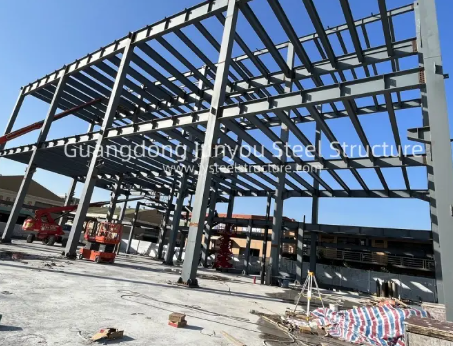
Unmatched Ductility and Energy Dissipation in Steel Structures
How structural steel’s ductility enables controlled, non-catastrophic deformation during seismic events
Structural steel’s high ductility—the ability to undergo substantial plastic deformation before failure—allows buildings to bend, yield, and absorb seismic energy without sudden collapse. Unlike brittle materials such as unreinforced masonry or poorly detailed concrete, ductile steel framing redistributes forces across the structure, avoiding localized failure points. This predictable yielding behavior provides critical time for occupant evacuation and dramatically lowers the risk of catastrophic collapse—making it a foundational requirement for life-safety design in high-seismicity regions.
Hysteretic energy absorption: yielding, local buckling, and stable post-yield behavior in steel members
Steel dissipates earthquake energy primarily through three interrelated mechanisms: controlled yielding, stable local buckling, and robust post-yield strength retention. During shaking, energy is absorbed via hysteretic loops—repeated cycles of loading and unloading—as specially detailed connections and members yield at predetermined locations (e.g., beam ends or brace links). This process converts kinetic energy into heat through internal friction and plastic deformation. Crucially, modern structural steels maintain significant strength beyond first yield, enabling reliable load redistribution across redundant paths. When combined with buckling-restrained braces or properly detailed moment-resisting frames, this behavior ensures resilience across multiple seismic cycles—validated by performance in real-world quakes like Northridge and Christchurch.
Optimal Strength-to-Weight Ratio Reduces Seismic Inertial Forces
Lighter mass cuts base shear by up to 40% vs. reinforced concrete—critical for tall steel structures
Structural steel’s superior strength-to-weight ratio yields significantly lighter buildings than comparable reinforced concrete structures—reducing inertial forces that drive lateral seismic demand. Because base shear scales directly with effective mass, this weight advantage translates to up to 40% lower base shear in steel high-rises compared to concrete counterparts, per studies from the American Institute of Steel Construction (AISC) and FEMA P-751. That reduction is especially consequential in tall buildings, where seismic forces amplify with height. The resulting efficiency supports slimmer, more economical designs without sacrificing performance—and accelerates construction timelines while preserving resilience under extreme ground motion.
Implications for foundation design and soil-structure interaction in high-seismicity regions
Lower structural mass directly eases foundation demands in earthquake-prone areas. Steel buildings typically impose 25–30% less vertical load than equivalent concrete structures, permitting smaller, shallower, and more cost-effective foundations. This benefit is amplified where soil-structure interaction (SSI) governs performance—particularly on soft, loose, or liquefiable soils. Reduced mass decreases dynamic soil pressures and mitigates liquefaction susceptibility during shaking. As a result, engineers often avoid expensive ground improvement measures or deep-pile solutions, especially in dense urban settings with challenging subsurface conditions. The synergy between lightweight framing and responsive foundation design enhances overall seismic safety while optimizing capital and schedule constraints.
Predictable, High-Performance Connection Systems in Steel Structures
The integrity of a steel structure during earthquakes depends fundamentally on its connection systems—not just their strength, but their predictable inelastic response. Unlike brittle connections that fail without warning, modern steel connections are engineered to yield in a controlled, repeatable manner while retaining load-carrying capacity. This behavior forms the backbone of life-safety performance in seismic design.
Moment-resisting frames and braced systems: verified post-yield stability and redundancy in real-world quakes
Two dominant connection strategies dominate high-performance seismic steel design: moment-resisting frames (MRFs) and braced frames—particularly eccentrically braced frames (EBFs). MRFs rely on rigid beam-column joints that develop plastic hinges in beams (not columns), dissipating energy through flexural yielding while maintaining global stability. EBFs incorporate deliberate “link beams” designed to yield in shear, absorbing energy through stable, repeatable hysteretic behavior. Both systems provide inherent redundancy: if one element yields or deforms, adjacent components share the load, preventing progressive collapse.
This isn’t theoretical. Post-Northridge investigations—including those by the SAC Joint Venture and NIST—confirmed that steel buildings with AISC 341-compliant connections experienced minimal damage, even at peak ground accelerations exceeding design expectations. Their consistent, measurable post-yield stiffness and strength retention enable accurate nonlinear modeling—giving engineers confidence in performance predictions and making steel uniquely suited for high-risk seismic zones.
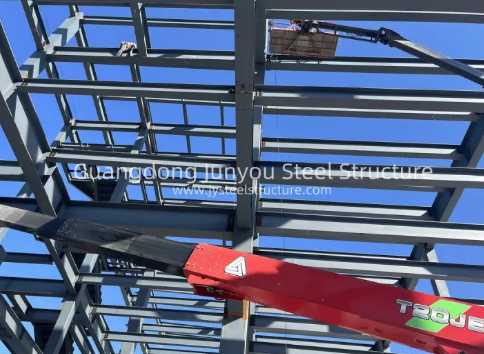
Inherent Design Flexibility for Advanced Seismic Mitigation Integration
Modular compatibility with base isolation bearings and viscous dampers in new and retrofitted steel structures
Steel’s modular geometry and high strength-to-weight ratio make it the material of choice for integrating advanced seismic protection technologies—both in new construction and retrofit applications. Base isolation bearings can be precisely seated beneath steel columns or integrated into podium-level transfer structures; viscous dampers fit efficiently within diagonal bracing bays or perimeter frames. This adaptability allows engineers to tailor energy dissipation strategies to site-specific hazards without compromising architectural intent or structural efficiency.
Retrofitting is equally viable: steel outriggers, supplemental braces, or damper frames can be added to existing concrete or masonry buildings with minimal disruption—leveraging steel’s ease of field connection and high load capacity per unit weight. Compared to alternatives, steel-based mitigation systems install faster, require less temporary shoring, and deliver higher performance-to-cost ratios. As demonstrated in projects like the San Francisco General Hospital retrofit and Tokyo’s Shinjuku Center Building, this flexibility transforms seismic resilience from an afterthought into a scalable, future-ready design strategy.
FAQ Section
Why is ductility important in steel structures during earthquakes?
Ductility allows steel structures to deform without sudden failure, enabling energy absorption and redistribution, which prevents catastrophic collapse during seismic events.
How does steel’s strength-to-weight ratio benefit seismic design?
Steel’s high strength-to-weight ratio reduces building mass and, consequently, seismic inertial forces. This results in lower base shear forces and more efficient, lighter foundations.
What are the advantages of modern steel connections?
Modern steel connections are designed to yield predictably under seismic loads while retaining strength, ensuring structural integrity and life-safety performance.
Can steel structures integrate advanced seismic mitigation technologies?
Yes, steel’s design flexibility allows for easy integration of systems like base isolation bearings and viscous dampers in both new constructions and retrofits.
Why are steel structures suitable for challenging soil conditions?
Steel’s lower mass reduces vertical loads and dynamic pressures on soil, minimizing the need for costly foundation solutions and mitigating risks like liquefaction.
Table of Contents
- Unmatched Ductility and Energy Dissipation in Steel Structures
- Optimal Strength-to-Weight Ratio Reduces Seismic Inertial Forces
- Predictable, High-Performance Connection Systems in Steel Structures
- Inherent Design Flexibility for Advanced Seismic Mitigation Integration
-
FAQ Section
- Why is ductility important in steel structures during earthquakes?
- How does steel’s strength-to-weight ratio benefit seismic design?
- What are the advantages of modern steel connections?
- Can steel structures integrate advanced seismic mitigation technologies?
- Why are steel structures suitable for challenging soil conditions?