 EN
EN
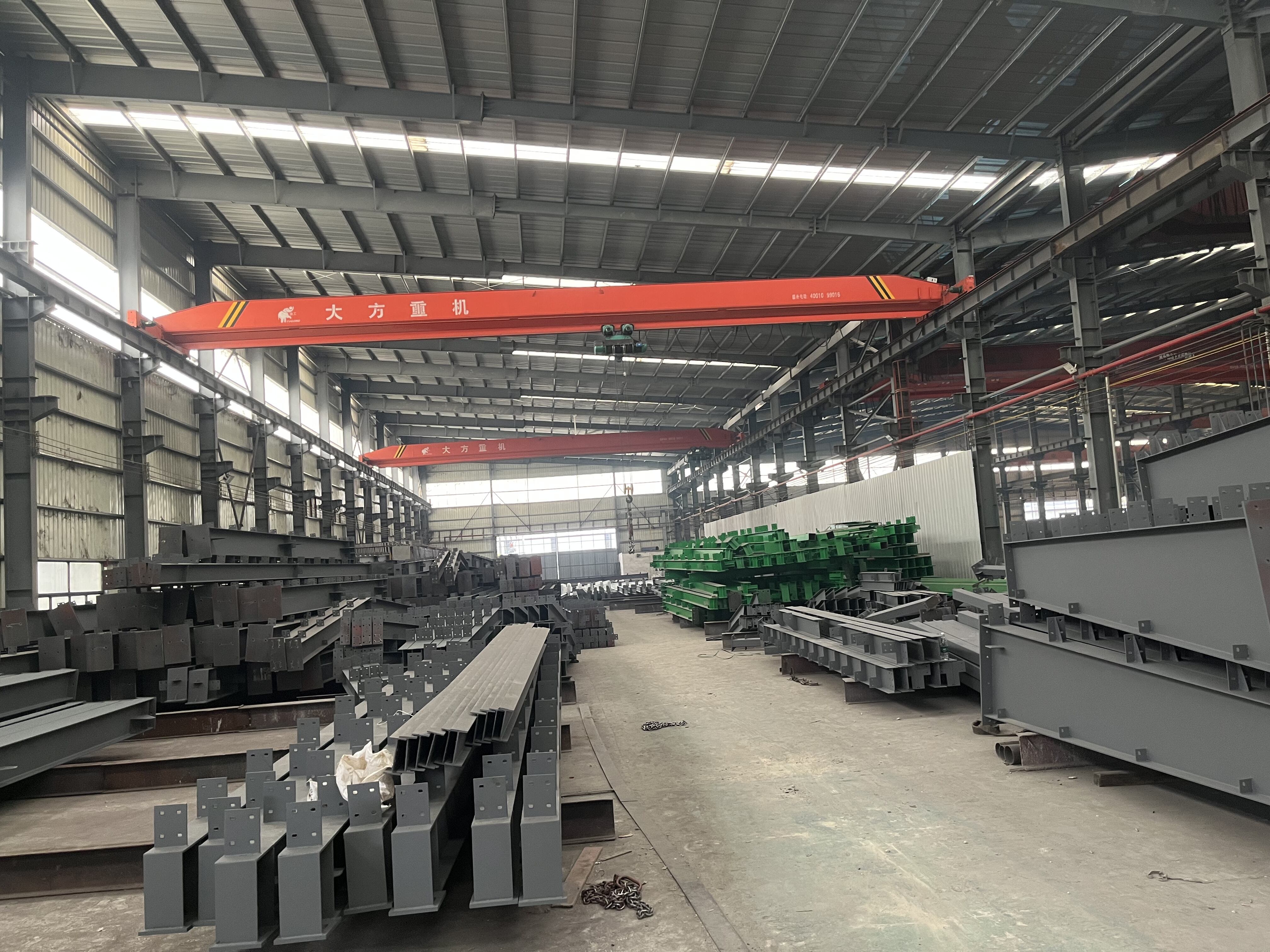
Integrated Quality Control as a Core Production Discipline
Why QC Must Be Embedded—Not Added—Across the Fabrication Workflow
For steel building manufacturers, quality control isn’t a final checkpoint—it’s a production discipline woven into every fabrication stage. When QC operates in real time—not post-production—defect rates drop by up to 40% and rework costs fall significantly (Journal of Operational Research). Critical integration points include:
- Material verification during unloading to intercept substandard steel before processing
- Concurrent weld inspections to halt error propagation mid-assembly
- Digital checklists at each workstation to enforce consistent compliance
Without embedded systems, flaws escalate rapidly in cost and complexity—recalls for structural components can add $50k per ton in remediation expenses. Leading fabricators treat QC as a cultural imperative, training teams to self-audit using statistical process control (SPC) dashboards that detect deviations within minutes.
Case Study: How Real-Time Dimensional Audits Prevented a $2.3M Pre-Engineered Building Recall
A Midwest manufacturer avoided catastrophic failure when laser-scanning robots detected a 12mm beam misalignment during fabrication—a deviation invisible to manual inspection. The project involved:
| Risk Factor | Traditional QC Outcome | Real-Time Audit Result |
|---|---|---|
| Primary frame spacing | Post-shipment discovery | Immediate correction |
| Anchor bolt positions | Structural compromise | 48-hour redesign |
| Coastal corrosion specs | Coating rejection | Adjusted spray parameters |
Had these flaws reached installation, the 200,000 sq ft warehouse would have required full disassembly. By embedding automated metrology directly into their plasma cutting line, the team saved $2.3 million in recall costs and 11 weeks of delay—proving dimensional precision demands continuous monitoring, not periodic validation.
Material Traceability and Certification for Steel Building Manufacturers
Bridging the Gap: From Mill Certificates to On-Floor Verification
Tracking materials through the production process turns all those paper documents into something useful for quality control. Mill certificates basically tell us what elements are present in the metal and how strong it should be when it leaves the factory. But smart companies don't stop there. They actually check these specs against what they find during production on the shop floor. The combination works pretty well - checking both the documentation and running tests on actual samples gives confidence that everything stays solid throughout manufacturing. From the moment raw materials arrive until components roll off the line ready for shipment, this two-step method helps maintain product reliability across the board.
Critical certifications like EN 10204 set baseline requirements, but enforcement varies meaningfully across applications:
| Certification Level | Verification Depth | Common Applications |
|---|---|---|
| 3.1 | Manufacturer’s self-testing | Non-critical structures |
| 3.2 | Independent third-party validation | Seismic/zonal compliance |
When checking materials on site, technicians use spectrometers to test alloy compositions and ultrasonic devices to measure thickness. These tests have actually found wrong steel grades about 12 times out of every 100 audits according to Fabrication Quarterly from last year. Coastal construction sites need special attention too. Salt spray tests are run there to see if the metal really stands up to corrosion as claimed on paper. Making sure what's written matches what's actually there stops those frustrating delays during installation. And it makes a real difference legally speaking too. Contractors report around a third less liability issues when working in areas prone to strong winds after implementing these checks properly.
Welding Integrity Assurance: Visual Inspection and NDT Protocols
Why 68% of Structural Failures Trace Back to Weld Joints—and How Leading Steel Building Manufacturers Mitigate Risk
About two-thirds of all structural steel failures actually start at weld joints, usually because there are hidden flaws beneath the surface or when the metal just doesn't fuse properly during welding. The best companies out there fight back against these issues by implementing several different checks throughout production. First comes visual inspection, which remains pretty much everyone's go-to method initially. Trained professionals look closely at weld surfaces with bright lights (around 1000 lux is standard) while running their hands over the metal and checking measurements with specialized tools. These basic but effective methods help spot around 40 percent of problems early on before they become major headaches down the road.
Non-destructive testing (NDT) then targets hidden risks through methods including:
- Ultrasonic testing, mapping internal discontinuities
- Magnetic particle inspection, revealing near-surface flaws
- Dye penetrant testing, exposing micro-cracks
Adherence to AWS D1.1 and ISO 3834 standards ensures rigor, while automated real-time monitoring flags anomalies during welding. Continuous welder certification programs further reduce human error—transforming joints from failure points into reliability anchors.
Corrosion Protection and Finishing Standards for Long-Term Durability
Coastal & Industrial Environments: Validating Coating Adhesion, Thickness, and Curing Under ASTM D7091
Coastal salt spray and industrial pollutants accelerate corrosion in steel structures up to 200% faster than inland environments. Leading manufacturers counter this by strictly validating three coating parameters per ASTM D7091:
- Adhesion, tested via cross-cut tape to prevent underfilm corrosion
- Thickness, measured in mils to ensure moisture barrier integrity
- Curing, confirmed through solvent rub tests to guarantee full chemical resistance
Proper execution extends coating lifespans to 25+ years in harsh settings; non-compliance risks premature failure. Validated systems cut maintenance costs by up to 40% versus untested applications (corrosion engineering studies).
Coating Performance Validation Criteria
| Parameter | Test Method | Acceptance Threshold |
|---|---|---|
| Adhesion | Cross-cut Tape | √5% material removal |
| Dry Film Thickness | Magnetic Gauge | ±10% of specification |
| Cure State | Methanol Rub | No residue transfer |
This protocol prevents structural compromises and eliminates unplanned maintenance costs exceeding $500k per incident in coastal facilities.
AISC Certification: The Gold Standard for Steel Building Manufacturers
Beyond Compliance: How AISC 207-22 Drives Continuous Improvement in Fabrication Quality
Getting AISC certified goes beyond just meeting regulations. It actually creates a system where quality keeps getting better over time. According to the AISC 207-22 standard, companies must document where materials come from and implement digital checks throughout production. This changes how quality control works, moving away from spot checks after problems happen to fixing issues before they occur during manufacturing processes. Regular outside reviews every three months look at welds and measurements to catch mistakes early. That saves money because fixing structural problems later costs hundreds of thousands according to some industry reports from last year. All these steps together create a cycle that makes everything more accurate and reliable across the board.
- Real-time correction of deviations via automated measurement systems
- Mandatory root-cause analysis for any non-conformance
- Biannual retraining led by AISC-accredited specialists
Digital workflow integration enables 99.8% bolt-hole alignment accuracy in complex assemblies, reducing on-site adjustments by 40% while preserving structural integrity under extreme loads.
FAQ
What is the importance of integrated quality control in steel building manufacturing?
Integrated quality control is crucial as it reduces defect rates and rework costs by embedding quality checks into every stage of fabrication. Such systems prevent costly errors and improve component reliability.
How do real-time audits help prevent recalls in building manufacturing?
Real-time audits, like dimensional checks during fabrication, identify issues before they escalate to recalls. Immediate corrections can save manufacturers significant amounts in recall costs and project delays.
Why is material traceability important in steel building fabrication?
Material traceability ensures that components meet specifications through verification during production. It prevents delays and liability issues due to mismatched material grades and strengthens legal compliance.
How do manufacturers ensure welding integrity in steel structures?
Manufacturers use visual inspections and non-destructive testing protocols, such as ultrasonic and magnetic particle inspections, to identify weld flaws. Adhering to standards like AWS D1.1 further mitigates risks.
What standards help in protecting steel structures from corrosion?
Standards like ASTM D7091 define parameters for coating adhesion, thickness, and curing. Validating these parameters prevents corrosion, prolongs coating lifespans, and cuts maintenance costs.
What does AISC certification signify for steel building manufacturers?
AISC certification signifies continuous improvement and adherence to high-quality fabrication standards. It fosters real-time problem resolution, extensive quality documentation, and regular external audits, enhancing reliability and accuracy.